

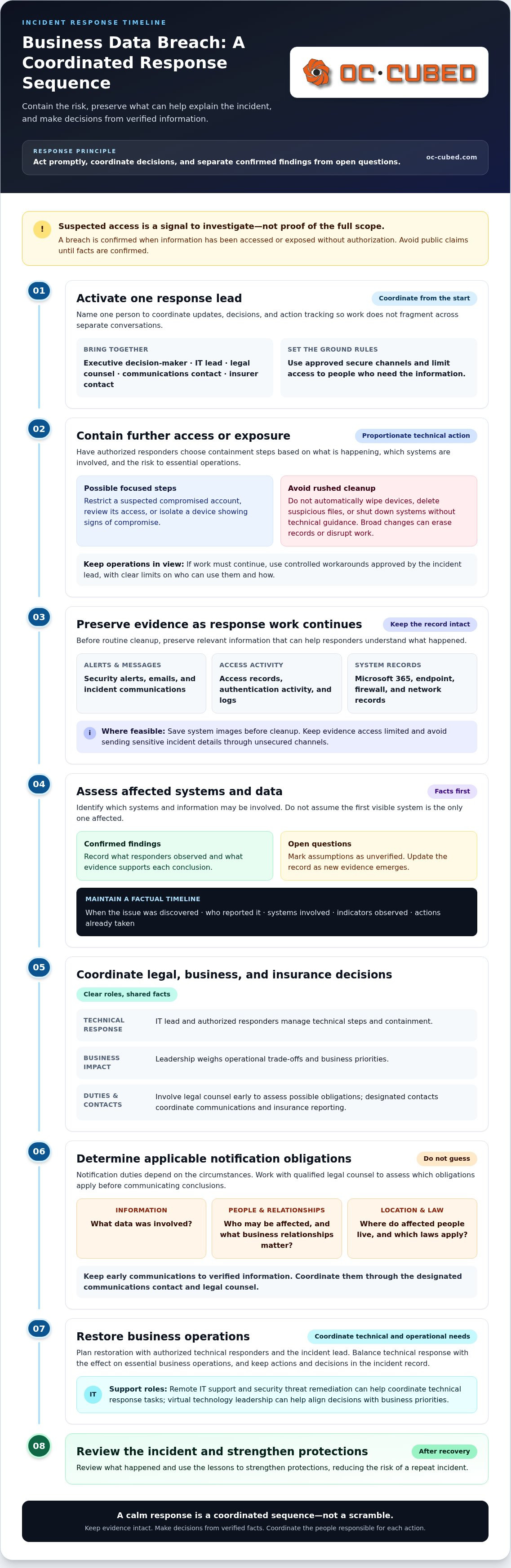
A suspected data breach calls for a clear sequence, not a scramble. Knowing what to do after a business data breach starts with containing the threat while preserving information that can help establish what happened. Avoid shutting down systems or deleting suspicious files without technical guidance, since those actions can complicate an investigation. Coordinate the response with authorized technical support.
It’s understandable to worry about whether an attacker is still active, what data may be affected, and how disruption could affect customers and employees. Notification duties can depend on the information involved, where affected people live, and which laws apply. You don’t need to resolve every question at once, but prompt, coordinated action matters.
This guide covers the response sequence: contain the incident, preserve evidence, assess affected systems and data, coordinate legal and insurance decisions, meet applicable notification obligations, and restore operations. It also explains how remote IT support and security threat remediation can support technical response tasks, while virtual technology leadership can help align decisions with business priorities. After recovery, review what happened and strengthen protections to reduce the risk of a repeat incident.
Key Takeaways
- For what to do after a business data breach, assign a response lead to coordinate early actions rather than making isolated decisions.
- Limit further exposure without automatically wiping affected devices, and weigh technical guidance against operational needs.
- Assess the impact by separating confirmed findings from unanswered questions and recording what supports each conclusion.
- Determine notification obligations based on the data, affected people, business relationships, and applicable laws, with qualified legal guidance.
- Turn lessons from the incident into prioritized fixes with accountable owners and follow-up reviews.
Data Breach: Making the First Decisions Calmly
Treat credible evidence that business data may be exposed as an incident requiring prompt, coordinated action. You can begin triage before you know the full scope, but confirm facts before making public claims about what happened or who was affected.
A data breach is confirmed when information has been accessed or exposed without authorization; suspected unauthorized access is a serious signal to investigate, not proof of the breach’s full scope. For general background on the term and typical response concepts, see the Data Breach Overview. Start with four organized steps:
- 1. Activate the response lead. Name one person to coordinate updates, decisions, and action tracking.
- 2. Contain immediate risk. Have authorized IT responders take proportionate steps to limit further access or exposure.
- 3. Preserve records. Keep relevant logs, alerts, messages, and other incident records intact.
- 4. Assess impact. Identify affected systems and data, separating confirmed facts from open questions.
Bring together an executive decision-maker, IT lead, legal counsel, communications contact, and insurer contact. Technical responders manage authorized containment, leadership makes business decisions, counsel assesses applicable duties, and designated contacts coordinate communications and insurance reporting. Share information through approved secure channels, and limit access to people who need it.
Who should lead the business data breach response?
Choose one incident lead, even when several teams are involved. That person tracks actions, owners, and updates so decisions don’t get lost across separate conversations. The IT lead or authorized responders manage technical steps; business leadership weighs operational trade-offs. Involve legal counsel early to assess possible obligations and support sound decisions. If your team needs technical coordination, remote IT support and security threat remediation can help organize response tasks.
What should you record as soon as you discover a breach?
Start a factual timeline. Record when the issue was discovered, who reported it, which systems are involved, what indicators were observed, and what actions have already been taken. Mark assumptions as unverified rather than presenting them as findings, and update the record as new evidence emerges. A shared, accurate record helps leaders and responders work from the same account without overstating what’s known.
As you consider what to do after a business data breach, resist speculating in customer, employee, or public statements. Keep early communications to verified information and coordinate them through the designated communications contact and legal counsel.
Contain the breach while preserving evidence and business continuity
Containment means limiting further access or exposure, not automatically wiping every affected device. The right action depends on what’s happening, which systems are involved, and the risk to essential operations. Coordinate changes with authorized technical responders and the incident lead. A rushed reset or shutdown can erase useful records, interrupt critical work, or make it harder to understand what occurred.
Good containment limits ongoing exposure while preserving the information responders need to investigate and guide recovery. Before routine cleanup, preserve relevant security alerts, emails, access records, system logs, and system images where feasible. Consider the effect on evidence and business continuity before deleting suspicious files or changing configurations. If immediate action is needed to stop active harm, responders should weigh the urgency against what may be lost and document their decision.
How do you isolate affected accounts, devices, or systems?
Have authorized responders disable compromised access or isolate affected endpoints when appropriate. They can review administrative accounts, active sessions, remote access, and suspicious authentication activity to identify where access may persist. Avoid broad changes that could disrupt unaffected systems. If the business needs to keep operating, use controlled workarounds approved by the incident lead, with clear limits on who can use them and how.
Match containment to the incident. A suspected compromised account may call for restricting that account and reviewing its access, while a device showing signs of compromise may need to be isolated. Don’t assume the first visible system is the only one affected. Remote IT support and security threat remediation can help coordinate technical actions across managed systems as leadership weighs operational impact.
How do you preserve useful evidence during containment?
Keep a time-stamped record of each response action, who took it, and what changed. Preserve relevant Microsoft 365, endpoint, firewall, and network records alongside alerts and access logs. Where feasible, save system images before cleanup. Limit access to evidence, and avoid sending sensitive incident details through unsecured channels. These records help responders compare activity over time and distinguish observed facts from assumptions.
For example, if a suspicious sign-in leads responders to restrict an account, record the alert, when access was changed, and who authorized the action. That gives the team a clearer basis for later decisions and recovery checks. A managed response process can make technical containment easier to coordinate. Remote IT support can help businesses organize this work alongside ongoing security monitoring.
Assess the breach, fix the cause, and verify safe recovery
After containing immediate exposure, build an evidence-based picture of what happened. Assess affected systems, data types, possible access duration, business disruption, and known exposure. Separate confirmed findings from open questions, and note which records support each conclusion. Don’t claim information was copied or exposed publicly unless the evidence supports it.
How can a business determine what data and systems were affected?
Correlate access records, endpoint alerts, email activity, network events, and user reports. Look for signs that information was viewed, altered, copied, encrypted, or made publicly accessible. For each finding, record its source and confidence level. Assign an owner to investigate unanswered questions, such as whether a suspicious account accessed shared files or whether activity continued after credentials were changed.
Make the assessment useful for decision-making. Summarize affected systems, the kinds of data involved, activity confirmed so far, and operational impact. List unresolved questions and the next steps for answering them. This gives leadership a clear basis for decisions without implying that the investigation is complete.
How should you validate systems before returning to normal operations?
Fix the cause before restoring routine access. Address the suspected entry path, correct known vulnerabilities, secure affected credentials, and strengthen relevant controls. Before restoring data or services, have responders assess the integrity of the source and the systems receiving it. A backup restore or restart alone doesn’t establish that the environment is safe.
Validate recovery in stages. Confirm that systems perform expected business functions, protections are active, access is limited to authorized users, and monitoring can detect suspicious repeat activity. Record which systems have passed checks, which remain restricted, and any risks leadership has accepted. If concerning activity returns, pause the affected recovery step and reassess rather than treating the system as cleared.
Recovery is a verified process, not a single restore. Keep the decision trail current as evidence changes, and make sure leadership understands what’s working and what remains uncertain. Security threat detection, endpoint protection, and network monitoring can support ongoing visibility as systems return to service. For businesses coordinating technical remediation and recovery, managed security support can help align these steps with operational priorities.
Notify the right people without guessing at breach reporting deadlines
No single notification deadline or recipient list applies to every incident. Duties can depend on the data involved, who may be affected, business relationships, and the federal, state, sector-specific, or contractual requirements that apply. Ask qualified legal counsel to assess those obligations promptly. Don’t assume every suspected incident triggers the same notices or that one rule covers all affected people.
Coordinate decisions through the incident lead. Counsel can assess applicable requirements, leadership can approve business decisions, and the communications contact can prepare consistent messages. The IT lead supplies verified technical findings. Review relevant contracts and insurer requirements with counsel, and coordinate any required notices to affected parties or authorities. Record decisions, approvals, delivery dates, and follow-up actions.
Who may need to be notified after a business breach?
Depending on the incident, the review may include affected individuals, customers, employees, business partners, regulators, law enforcement, and an insurer. Not every group will apply. Counsel can help determine who must be notified, the applicable timing and content requirements, and whether contracts or business relationships create additional reporting steps. Document why each notification decision was made and who approved it.
What should a clear breach notification communicate?
Explain what happened, what information may be affected, and what the organization has done so far. Separate confirmed details from matters still under investigation. Give recipients practical steps they can consider, explain where to find reliable updates, and avoid promising outcomes the investigation can’t yet support. The incident lead and counsel should coordinate timing and wording so messages are accurate and consistent.
For example, if you’ve confirmed unauthorized access to an account but haven’t established whether files were viewed or copied, state that distinction plainly. Don’t describe possible exposure as confirmed disclosure. Update communications if reliable new findings change what affected people need to know. Clear, measured notices help recipients understand the known impact without adding speculation or confusion.
As part of what to do after a business data breach, treat notification as a coordinated workstream, not a last-minute announcement. Keep the technical assessment, legal review, leadership approval, insurer communication, and recipient messaging aligned, and maintain a record of each decision.
For help coordinating the technical side of a response, see OC Cubed’s remote IT support.
Turn the incident into a stronger business data breach response plan
Recovery isn’t complete when systems are back online. Use a lessons-learned review to identify the likely root cause, response delays, control gaps, and effects on business operations. Separate technical fixes from process improvements, then rank actions by risk. Assign an owner and target for every fix, and track progress through follow-up reviews so recommendations don’t stall after the incident.
Use the findings to update response roles, escalation contacts, secure communication methods, and staff procedures. Check whether backup and recovery steps worked as expected, whether access controls need tightening, and whether the incident log captured the information leaders needed. The plan should identify who coordinates technical containment and recovery, who makes business decisions, and who works with counsel on notification decisions.
How can managed IT support strengthen recovery and prevention?
Remote IT support can help coordinate technical response and restore managed systems. After recovery, security threat detection, endpoint protection, and network monitoring provide ongoing visibility into activity across devices and networks. Microsoft 365 tenant maintenance and email security can support safer account and messaging practices. These capabilities work best as part of an improvement plan with clear owners, regular review, and follow-through.
For broader planning, explore managed cybersecurity for small business and the 2026 cybersecurity risk strategy. Virtual CIO, CTO, or CISO guidance can help connect security priorities to business needs, including which improvements to tackle first and how to track them.
What should a business put into its next incident response plan?
Make the plan usable under pressure. Include named escalation contacts, decision authority, secure communication methods, and an incident log template. Document containment priorities, recovery checks for backups and restored systems, and who coordinates notification decisions with qualified counsel. Review contact details and procedures when roles or systems change.
Keep the plan current through practice and follow-up. If the incident exposed a gap, such as unclear approval authority or missing access records, revise the procedure and assign someone to confirm the change is in place. Knowing what to do after a business data breach is only part of readiness; keeping roles, protections, and recovery steps aligned helps the business respond with greater control next time.
Build a More Resilient Response for What Comes Next
A steady breach response follows a clear sequence: contain the threat while preserving evidence, assess what was affected, coordinate required notifications, and verify systems before returning to normal operations. Then use the lessons to close control gaps, clarify ownership, and strengthen the response plan.
Knowing what to do after a business data breach can help leaders make measured decisions while facts are still emerging. Remote IT support, helpdesk, and NOC integration can support technical coordination. Security threat detection and remediation, endpoint protection, and network monitoring help maintain visibility. Microsoft 365 tenant maintenance and email security with Proofpoint support safer business operations, while virtual CIO, CTO, and CISO advisory services help align security priorities with business needs.
Preparation doesn’t remove every risk, but clear roles, reliable records, and ongoing improvement can put your business in a stronger position. OC Cubed provides remote IT support and managed IT services to help businesses coordinate technical operations and security work.
Frequently Asked Questions
What should a business do first after a data breach?
Start by activating a response lead and treating credible exposure as an incident that needs coordinated attention. Have authorized IT responders assess immediate risk and contain affected accounts or systems where appropriate, while preserving relevant records. Record when the issue was discovered, what was observed, and what actions have already been taken. For what to do after a business data breach, focus on verified facts first, then assess impact and coordinate legal, leadership, and communication decisions.
Should I shut down computers after a suspected business data breach?
Don’t shut down every computer automatically. Powering down, wiping files, or changing settings can affect evidence and interrupt business operations. Have authorized technical responders assess the specific device and choose an appropriate containment step, such as isolating it from the network. If there’s an immediate threat, prioritize limiting harm, but document the action and its timing. Keep essential work moving only through controlled alternatives approved by the incident lead.
How do I know whether a business data breach is reportable?
Whether an incident is reportable depends on the information involved, who may be affected, your business relationships, and the laws or contracts that apply. A suspected access event doesn’t automatically establish what data was exposed or which notice duties apply. Preserve the facts as they emerge, then ask qualified legal counsel to assess relevant federal, state, sector-specific, and contractual requirements. Don’t rely on a general deadline or another organization’s experience to decide your obligations.
Who should a business notify after a data breach?
Potential recipients may include affected individuals, customers, employees, business partners, regulators, law enforcement, and your insurer, depending on the incident and applicable requirements. Work with qualified legal counsel to determine who must be notified and when. Coordinate message approvals through the incident lead, leadership, and communications contact. Keep a record of notification decisions, approvals, delivery dates, and follow-up actions. Share only verified information, and distinguish established facts from questions still under investigation.
Should a business contact its cyber insurance company after a breach?
Review your cyber insurance policy and contact the insurer promptly through the process it specifies. The policy may set requirements for reporting an incident, documenting costs, or coordinating response steps. Don’t assume coverage or wait for the technical investigation to finish before checking the policy. Record whom you contacted and when, and coordinate insurance communications with the incident lead and legal counsel. Your insurer can explain its process, but counsel should assess legal and notification obligations.
Can a business restore its systems from backups after a cyberattack?
Yes, but restore only after authorized responders assess the backup’s integrity and the destination system’s security. A backup may contain compromised files or reflect a point when an attacker still had access. Address the suspected entry path, secure affected credentials, and check that protections and monitoring are active before returning systems to normal use. Document recovery decisions and remaining risks. A successful restore is one part of recovery, not proof that the environment is safe.
How can a business reduce the risk of another data breach?
Use the incident review to identify the likely cause, control gaps, and response delays, then assign owners to prioritized fixes and track them through follow-up reviews. Strengthen access controls and staff procedures, and keep endpoint protection, network monitoring, Microsoft 365 maintenance, and email security current. Practice response roles and recovery steps so people know whom to contact and how to act. Remote IT support and virtual technology leadership can help coordinate ongoing security work with business priorities.


